Substrate & exposure audit
We map aluminum composite, glass, gypsum, and painted steel interfaces against peel adhesion, dimensional stability, and moisture vapor transmission risks before a color family is locked.
Specification Services
Architects, facade consultants, and general contractors use our process to align wrap colors, window tint constructions, and bonding tapes with fire resistance rating routes, VOC emissions limits, and installation schedules.
Each track produces documentation your purchasing and QA teams can attach to the same RFQ package without rewriting technical assumptions later.
We map aluminum composite, glass, gypsum, and painted steel interfaces against peel adhesion, dimensional stability, and moisture vapor transmission risks before a color family is locked.
On-site or lab mock-ups validate abrasion resistance for high-touch lobbies, UV stability for west elevations, and edge-seal practice for humid coastal climates before procurement freezes.
ISO 9001 process documentation, SDS packs, recycled content percentage notes, and warranty period language are bundled so LEED and IAQ reviewers see one coherent file.
Collect elevation drawings, glass schedules, traffic levels, and any Class A / Class B fire resistance rating constraints already written into the project manual.
Compare cast wrap films, solar-control window tint, reflective tapes, and double-sided bonding systems against thermal bridging and service life expectancy targets.
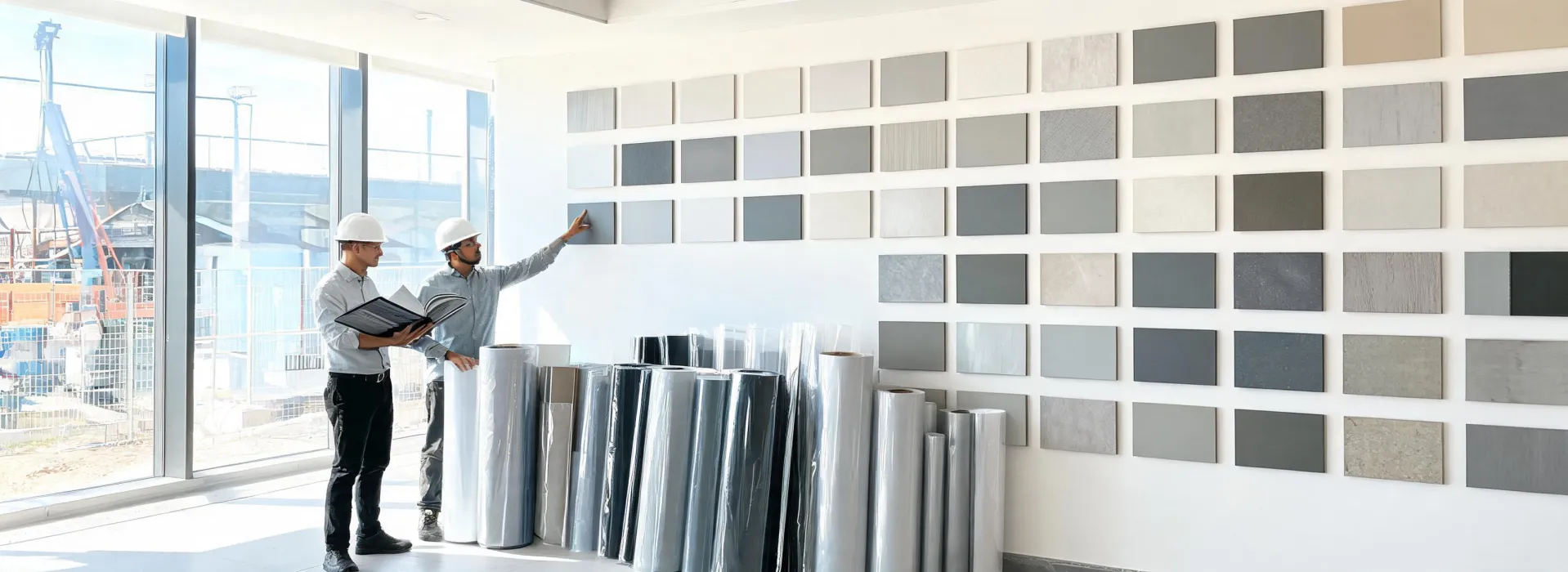
Ship SW900-adjacent color chips, laminate options, and tape coupons so design teams can judge gloss, texture, and adhesion on the actual substrate.
Confirm surface prep temperatures, squeegee sequences, and cure windows so compressive load paths and film tension stay within published guidance.
Natural stone veneers and painted aluminum often compete with engineered film overlays on renovation budgets. When the design intent prioritizes rapid tenant turnover, engineered vinyl wrap colors with verified dimensional stability can replace multi-week paint cure cycles while still documenting VOC emissions for occupied buildings. When the brief prioritizes century-scale authenticity on heritage masonry, we will say so and recommend film solely for reversible interior graphics rather than forcing a facade wrap.
Green certification premiums versus budget reality show up most clearly on affordable housing and value-engineered retail. Avery Dennison services quantify recycled content percentage and embodied carbon contributions so teams can decide whether Cradle to Cradle designated constructions justify the incremental cost, instead of assuming every LEED worksheet requires the premium SKU.
Bonding tapes do not replace engineered fasteners on wind-loaded cladding. Window tint films do not magically raise an existing glass system to a new impact resistance class without a tested stack. We document limitations up front so design-led aesthetics and performance-led safety requirements stay in productive tension instead of becoming change orders.
Share your glass schedule, substrate list, and fire resistance rating targets. We will respond with a film and tape shortlist sized for mock-up—not a generic catalog dump.